
We're working with select organisations to deploy and validate QKD in real network environments. If you're evaluating quantum-safe security for your optical infrastructure, get in touch. Our team will walk you through the technology and explore whether a deployment suits your context.
Quantum Key Distribution for Critical Networks

Get in Touch
Learn how the system works in practice and explore if QKD is suited to your optical infrastructure
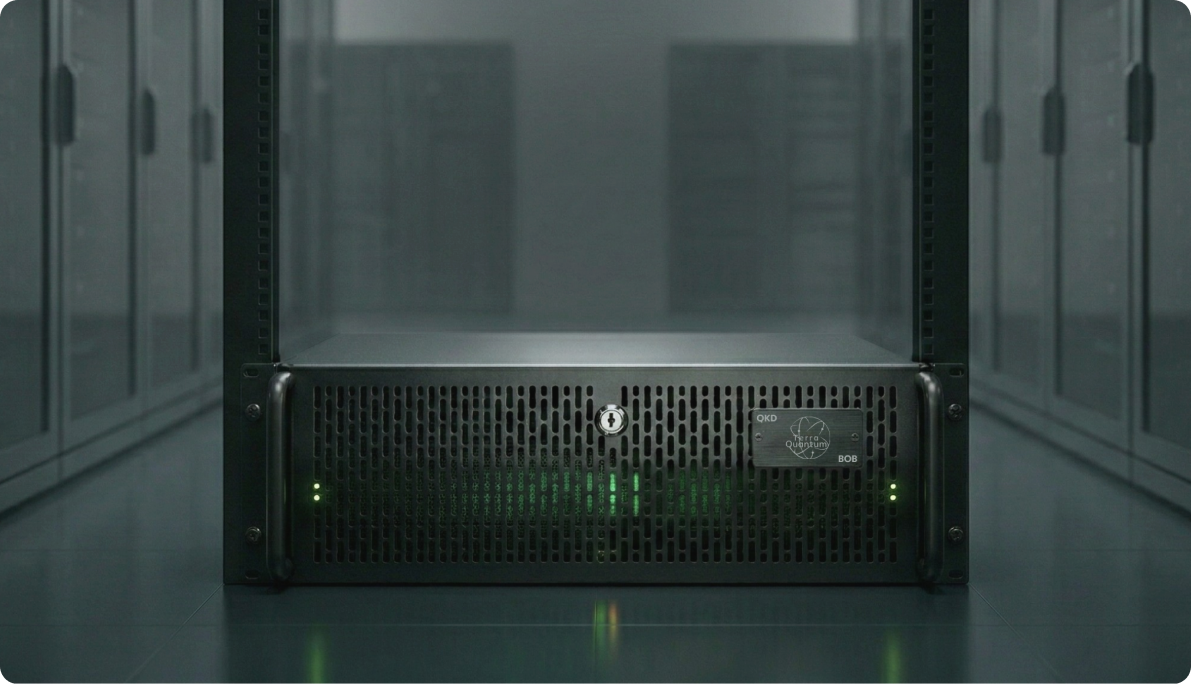
Built for Critical Infrastructure Networks
Engineered for environments where network resilience, security, and uptime cannot be compromised:
Record long distance QKD links
Patented protocol enables record QKD link distances, delivering secure key exchange over ultra-long fiber connections while maintaining uncompromised data security.
Flexible dark- and lit-fiber deployment
Supports not only dedicated dark fiber but also DWDM, allowing lit fiber over existing telecom infrastructure without requiring additional fiber investment.
KMS-agnostic architecture
Fully compatible with third-party KMS and aligned with ETSI GS QKD 014 interoperability standard, seamlessly integrating into existing cybersecurity infrastructures.
Fiber link monitoring and intrusion detection
OTDR-based monitoring detects and localizes intrusions along the fiber link, enabling rapid response, minimizing downtime, and helping to prevent future attacks.
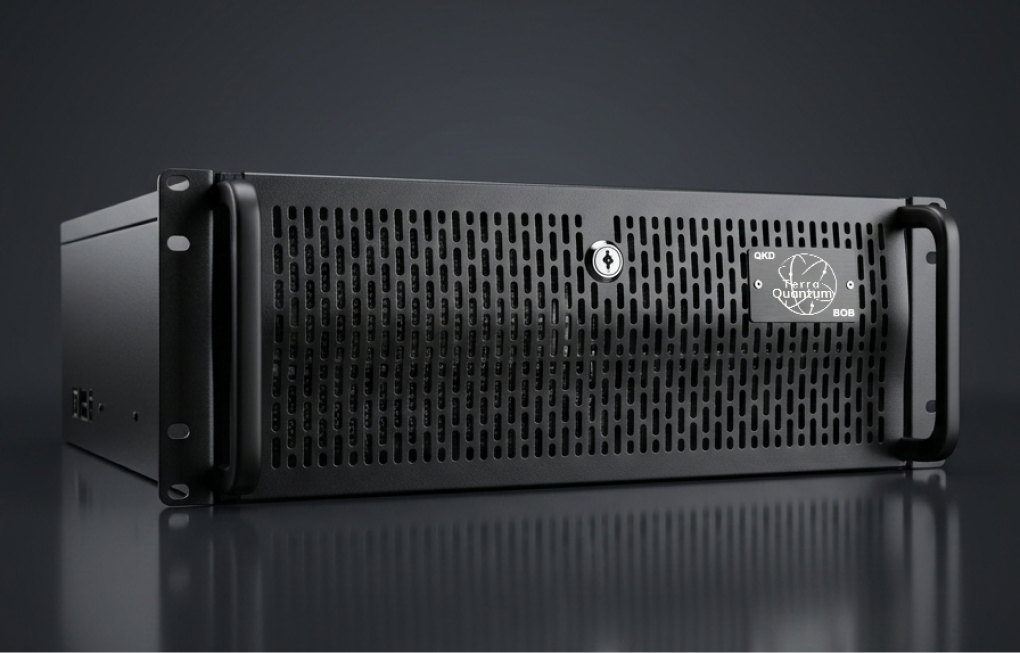
Typical Deployments
Typical deployment scenarios include:
- Inter-data-center backbone connections
- National and regional telecom backbones
- Government and defence infrastructure
- Energy grid control networks
- Financial clearing and settlement systems
System Architecture
Terra Quantum's QKD system is built on a proprietary, patented protocol that uses optical loss control to detect and localise eavesdropping attempts.
The system distributes encryption keys across monitored optical fiber links between two endpoint appliances, rack-deployed within data centers or telecom facilities, and connected directly to the optical network.
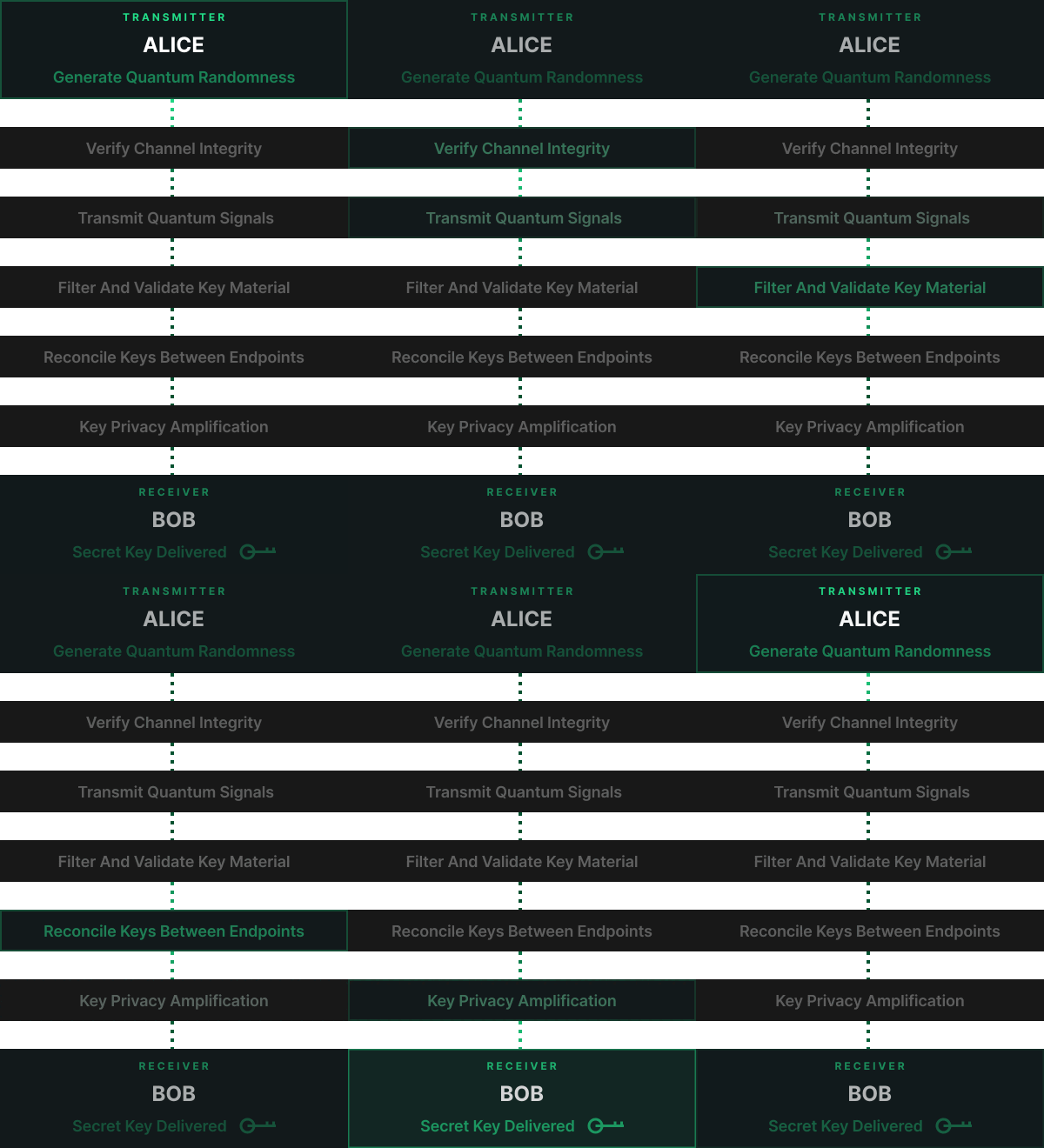
The system operates between two nodes:
Transmitter (Alice)
Generates and encodes quantum optical signals before transmission across the fiber link.
Receiver (Bob)
Receives and measures the transmitted quantum signals and validates the generated keys.
Integrated Quantum Entropy (QRNG)
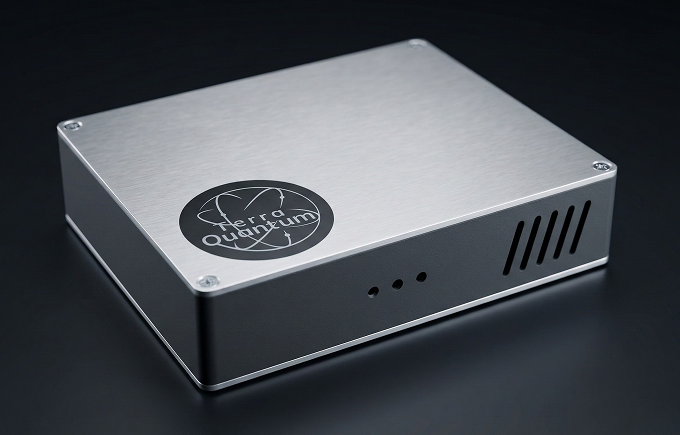
Each QKD transmitter includes an integrated METAS-certified Quantum Random Number Generator (QRNG) that provides true quantum entropy for key generation.
Unlike classical pseudo-random generators, QRNG produces randomness derived from physical quantum processes, supporting secure key generation and strengthening the integrity of the network.
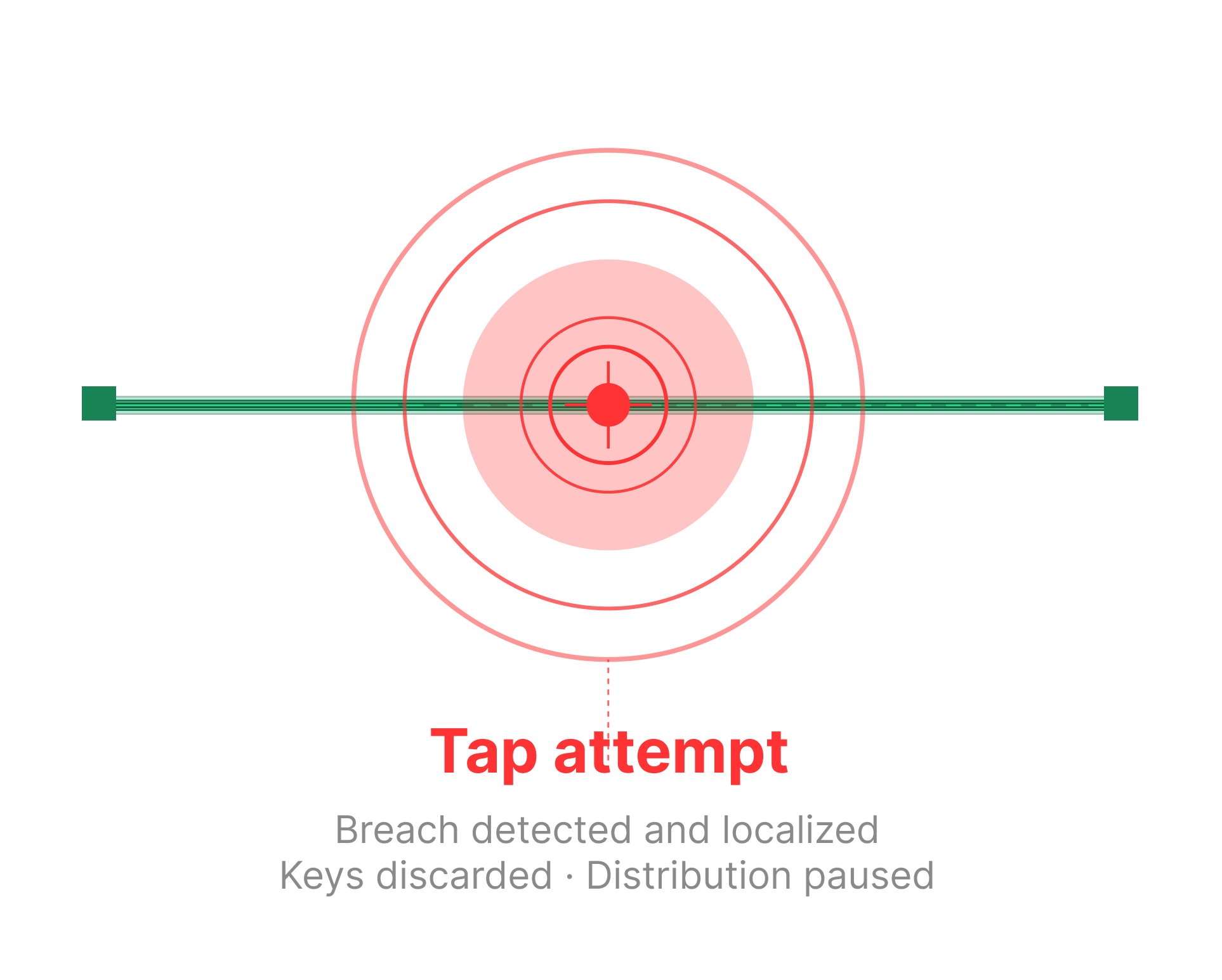
Real-Time Fiber Integrity Monitoring
The QKD system continuously monitors the optical fiber link during operation. OTDR-based monitoring analyzes the fiber channel and detects anomalies along the route, enabling detection of potential interception or infrastructure faults and providing operational visibility across long-distance fiber links.
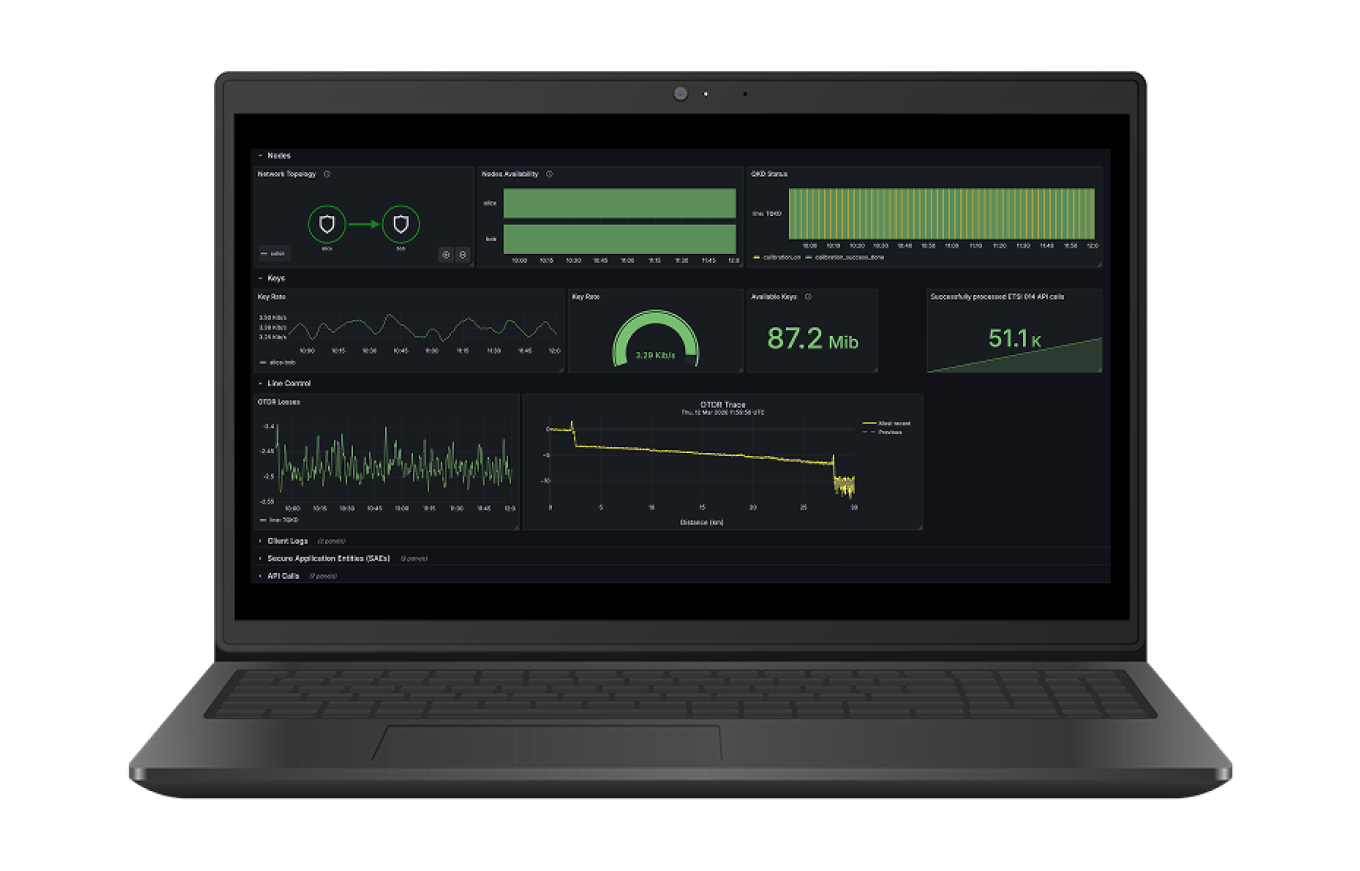
Key Management Integration
QKD-distributed symmetric keys are managed by our Key Management System (KMS), which handles key validation, storage, and delivery to authorized applications.
- ETSI GS QKD 014 standards-aligned REST interface for key delivery.
- Mutual TLS authentication with Post-Quantum Cryptography support.
- Statistical validation of distributed key material before acceptance (NIST SP 800-90B health tests).
- Centralized monitoring and performance control, key throughput, and link status.
Standards-based design enables seamless integration with third-party encryption infrastructure, KMS, and enterprise security workflows.
Scientific Validation
Terra Quantum’s loss control-based QKD architecture is based on extensive peer-reviewed research in quantum communication and optical network security. The protocol and system design have been evaluated through experimental deployments and academic collaboration. Supporting publications are available in the Terra Quantum research library.

In-Field Quantum-Protected Control-Based Key Distribution with a Lossy Urban Fiber Link
03/28/2025
Loss Control-Based Key Distribution under Quantum Protection
05/22/2024
Device-independent quantum key distribution from generalized CHSH inequalities
08/14/2023
Forty Thousand Kilometers Under Quantum Protection
05/22/2023
Optical fiber-based key for remote authentication of users and optical fiber line
05/22/2023

Frequently Asked Questions
Can QKD operate on live fiber networks?
Yes. Our QKD system can operate on both dark fiber and live (lit) fiber networks. It has been validated to coexist with classical optical traffic under defined telecom network conditions.
What type of QKD protocol does the system use?
Our QKD uses a proprietary loss control-based QKD protocol built on coherent light pulses. This approach is designed to work with telecom-grade optical components and enables secure key generation over long, lossy fiber links.
What fiber conditions are required?
QKD performance depends on factors such as fiber attenuation, network topology, and deployment configuration. The system has been validated on both dark and lit fiber in real telecom environments.
Do we need dedicated fiber?
No. The system can operate over existing lit fiber infrastructure using Dense Wavelength Division Multiplexing (DWDM), allowing QKD to run alongside classical data traffic without requiring infrastructure changes.
Can we use our own KMS with TQ QKD?
Yes. While our QKD solution includes a built-in Key Management System (KMS), it is KMS-agnostic by design. Through an ETSI GS QKD 014–aligned REST API, it enables secure, seamless integration with third-party KMS and external encryption systems.
What is the maximum link distance?
The maximum distance depends on the deployment architecture.
- On dedicated fiber, our proprietary protocol enables the use of IP proprietary amplifiers approximately every 50 km, allowing transmission over very long distances. Terra Quantum currently holds the long-distance QKD record, exceeding 1,700 km.
- In multiplexed deployments over lit fiber, the achievable distance is typically shorter and depends on factors such as fiber attenuation, network topology, and overall conditions.
Can the amplifiers be housed in standard Points of Presence?
The amplifiers are designed for low-maintenance operation and can typically be installed in standard telecom Points of Presence (PoPs) without requiring special protection.
What's the difference between PQC and QKD?
- PQC uses new cryptographic algorithms that run on conventional computers and are designed to resist quantum attacks.
- QKD uses the principles of quantum physics to securely generate and distribute encryption keys over optical fiber networks. These technologies are often complementary: PQC strengthens software-based encryption, while QKD provides physically secure key distribution for high-security network environments.
Evaluate QKD for Your Optical Infrastructure
Get in Touch
Learn how the system works in practice and explore if QKD is suited to your optical infrastructure
We're working with select organisations to deploy and validate QKD in real network environments. If you're evaluating quantum-safe security for your optical infrastructure, get in touch. Our team will walk you through the technology and explore whether a deployment suits your context.